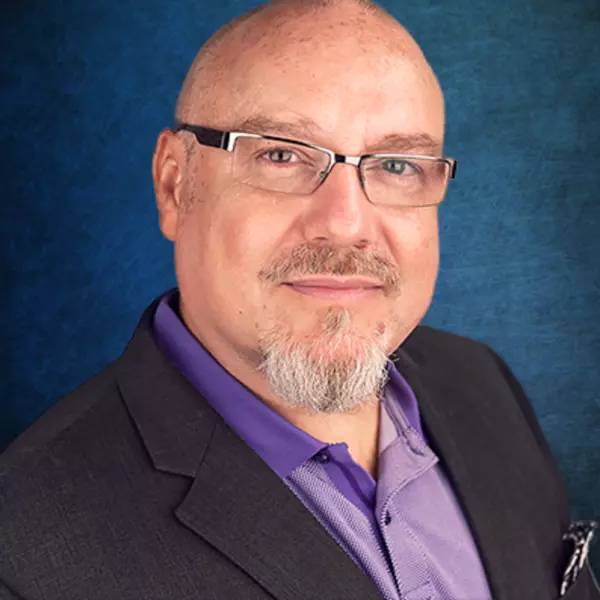
He Filed a Permit for an Addition to His Home, Then the City Requested Half His Front Yard
Chad Trausch just wanted to build a small addition to his Miami home. With a baby on the way, he and his wife were making space for her parents to move in and help with child care. But when he submitted the plans, the city hit him with a condition he never expected: If he wanted a permit to build in the backyard, he’d first need to grant the public the right to use half his front yard.
The city requested that Trausch record a deed dedicating a 10-by-50-foot strip of his property for public use at his own expense. Such a condition would have allowed the city to treat the land as its own for sidewalks, street widening, or utilities, without paying him for it.
It wasn’t a case of eminent domain: There was no compensation, no formal taking. Just a response to a standard permit application.
“They said in no uncertain terms, if you don't give up this land, you don't get your permit,” Trausch tells Realtor.com®.
When Trausch refused, his addition stalled, costing him thousands of dollars in added expenses. But the deeper he dug, it became clear that he was far from alone. With legal help from the Institute for Justice, Trausch uncovered a practice that may affect more than 1,000 homeowners across Miami—one that, according to a new lawsuit, pressures residents to grant public right of way to their land through permits without any public use plan or payment.
A permit for a backyard addition, and a front-yard ultimatum
Behind the city’s request was a claim that it needed the 500-square-foot patch for a future right-of-way expansion.
The public right of way is the legal right for the public to use a specific strip of land, even if it’s privately owned. It’s the doctrine that makes sidewalks and utilities possible. In Miami, public right of way is established at 25 feet, according to local code. That means, when measured from the center of the street, there should be a 25-foot radius that is reserved for public use, Suranjan Sen, an attorney with the IJ, explains.

Currently, in the Trausches' neighborhood, that 25-foot radius lines up almost perfectly with where the sidewalk ends and their front yard begins, says Sen. But the building setback line (also called the base building line)—the area of a property where construction is prohibited—extends to 35 feet from the center of the street, creating a 10-foot gap between the edge of the public right-of-way and where building is allowed to begin.
The city said it needed the land to match future development plans, but Trausch’s team says that doesn’t mean the property should be up for grabs.
“Chad owns it. He can exclude people from it. He can have his fence there, but he's just not allowed to build right up there,” says Sen.
To complicate matters further, the city had no formal plan for expansion, and didn’t offer the Trausches compensation. Worse, Trausch says, the city wanted him to pay to record the deed transfer himself.
“They're asking us to pay that out of pocket, then hand [it to] them for free. … They said that's just how it's always been done,” he says.
But Trausch, a Navy veteran, wasn’t having it. Instead, he represented himself in court and fought the city for over a year at enormous personal expense. In that time, inflation and rising construction costs drove up his renovation budget by an estimated $200,000.
Even more damaging, the standoff forced Trausch's wife and newborn to temporarily move out of state for child care support. Trausch stayed behind to manage the house, his job, and the lawsuit.
“It's really hurt our family,” he says.
How the city can claim private land without using eminent domain
Unlike a formal eminent domain proceeding, where the government must prove public use and pay compensation, the city of Miami has allegedly developed an “unwritten rule” that sidesteps that process entirely.
If a homeowner applies for a permit and their building setback or base line extends beyond the public right of way line, the city requests the difference.

Sen says in a deposition for the IJ’s suit that the director of Miami Public Works testified that “their policy is an unwritten rule that if you need a land use permit, and if the base building line on your property is beyond the currently established public right of way, then they'll just mechanically demand it as a condition of your permit.”
That process violates long-established legal doctrine, according to the team at the IJ.
“Cities should be going through eminent domain for these kinds of things,” Sen says. But, he adds, “I'm not sure that they'd even be able to take this land through eminent domain, and the reason is, they don't have any particular plan for it.”
In a proper taking, the government must justify its need, show how the land will be used, that it's reasonably necessary for the public use, and then pay fair market value for what it takes.
But no plan has been presented.
“There's no plan for that land at all,” Trausch says.
More than 1,000 homes may be impacted
The Trausches' case may be far from unique.
By systematically tracking homes where the base building line is beyond the standard public right of way, the Institute for Justice has identified 66 streets and more than 1,000 homes on streets where the same permitting trigger could force them to grant public right of way to part of their front yard.

“We've heard from architects, contractors, lawyers in Miami that they do this all the time to people in Miami, and it's just it's run as a matter of routine, and so people don't really fight back,” Trausch says.
One clue to the practice may lie in the city’s own maps.
“If you look at Miami's GIS maps of property lines, you can actually see where it will zigzag," says Sen. "I think one can infer that every time it zigzags like that, that represents that parcel has been forced to give up their front yard."
In court filings, the plaintiffs cite sworn testimony from Miami’s public works director, who stated that the city has subjected hundreds of homeowners to this requirement.
Yet so far, there’s been no official move to end the practice.
Why the plaintiffs say it’s unconstitutional, and why homeowners rarely fight back
The legal team representing the Trausches argue that what’s happening in Miami amounts to an unconstitutional end-run around the rules of eminent domain.
“We also said, if you want to eminent domain this, you can do that, but you have to compensate us," Trausch says.
But, he adds, "They said, no, this isn't eminent domain. We're not compensating you anything. In fact, you have to self-finance this handover of land to us.”
Most homeowners, Trausch says, don’t fight back because the value of the project they’re trying to complete often outweighs the value of the land the city wants for public right of way.
“The value of me doing my project and building a home for my family will be way more, in most cases, than the land," he says. "So they count on most people just giving up.”
When the Institute for Justice entered the case, the city quickly backed off its demand—at least for the Trausches. “As soon as IJ filed their notice of appearance in court, two weeks later, the city said, OK, we're gonna waive that condition.”
To Trausch, the timing sent a message. “It's kind of insulting, right? Because it means they were just happy to fight me and stonewall me. But as soon as some real lawyers showed up, they tried to make it go away.”
Even then, Trausch says the city made clear that the waiver was temporary. “They said they reserve the right to ask for this land and demand it again.”
That means that any new permit—for a new roof, future addition, or other necessary upgrade for a historic house built in the 1930s—could trigger a taking. That’s why he and the IJ are pressing forward with their case. They want the court to declare the practice illegal and block the city from using it in the future. They’re also seeking damages for the costs of the delay, now estimated at several hundred thousand dollars.
Beyond the legal questions, Trausch says the case raises a deeper issue about fairness and trust. “We like living in Miami, we believe in the community, we want to put down roots here, and, we expect them to follow the same rules they expect us to follow.”
That's why it's about more than just a 500-square-foot strip of land, his attorneys argue.
“People don’t realize how important land use law is to our daily lives," Sen says. At the heart of the case, he argues, is a basic constitutional promise. “People have a right to use their property, and people have a right not to have their property taken from them without just compensation.”
Categories
Recent Posts


GET MORE INFORMATION