They Tried To Build a Tiny Home To Help Families in Need—So Why Did Their City Council Ban ADUs in Response?
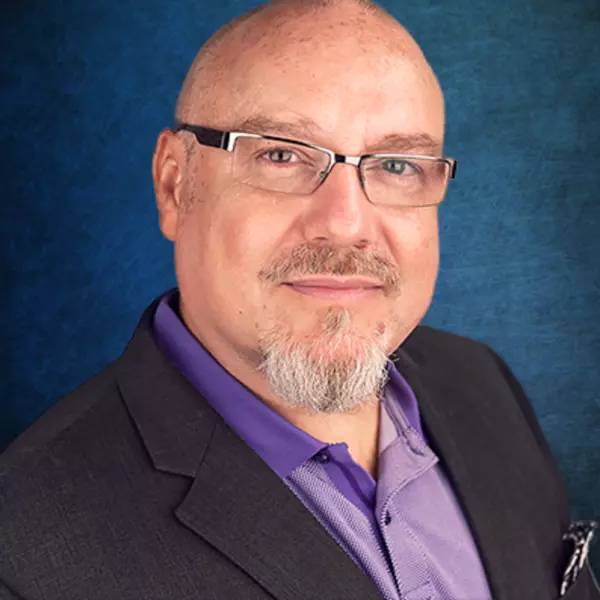
Alex Pepin thought he was following all of the rules when he submitted his application to build an Accessory Dwelling Unit, or ADU, on his family’s property in Blaine, MN.
The city had recently passed an ordinance allowing for detached ADUs, and he had gotten help from city staff in submitting his documentation. He’d even drawn up the site plan himself.
The project had many benefits: Alex would be creating additional housing stock in a country that is clamoring for more affordable housing. The unit could one day house his aging in-laws or his growing children. In addition, Alex’s work with the local homeless population would benefit from it—he envisioned making the unit available to help families transitioning out of homelessness.
“We thought it could do a lot of good things—caring for family, caring for people outside of it, too,” Pepin tells Realtor.com® in an exclusive interview. “Then we went to the planning commission and applied.”
Instead, Pepin’s planned ADU sparked controversy in his neighborhood, and led to a backlash that culminated in the city council of Blaine banning detached ADUs outright. What was supposed to be a simple construction project had become the latest chapter in America's affordable housing standoff: Everyone wants more of it, until it shows up next door.


The housing tool people love—in theory
The United States needs more affordable housing. A lack of supply has helped make homeownership prohibitively expensive for many. But the question remains: Where does this housing go?
ADUs are one possible solution. Sometimes called granny flats, ADUs are self-contained, secondary housing units located on the same plot of land as an existing single-family home.
An ADU can either be attached to the home or detached, allowing for more privacy and flexibility in its structure and layout. ADUs have been floated as a solution to the housing crunch from New York to California and everywhere in between.
Generalized support for “more housing” and “walkable neighborhoods” is one thing, but efforts to actually create them are often stymied by local government, which can come under pressure from homeowners to block more housing from being built near them, that would either impact their home values or change the character of the neighborhood.
A good neighbor with a plan
Pepin and his wife, both Minnesota natives, moved to Blaine in 2013 and into their current home almost 10 years ago. To some neighbors, according to Pepin, that still makes them “the newcomers” in an area where some have lived for decades.
An environmental engineer, Pepin has also been deeply involved in nonprofit work through his church, particularly around helping families transitioning out of homelessness. For years, Pepin’s nonprofit, Ten Thirty House, worked in conjunction with a local network of nonprofits and utilized a gifted home in nearby Minneapolis as supportive housing for homeless families.
When the logistics of supporting families from a distance became too complex, Pepin began exploring the idea of an ADU on his own property. In 2019, Blaine had passed an ordinance allowing for the construction of ADUs. Pepin saw this as a possible solution.
“If you look at the full life of this structure, my parents might move in there for a handful of years, then the kids maybe after college. At some point, because housing is so expensive, maybe one of our kids could buy the main residence, and my wife and I would move into the ADU. There's a real possibility this would primarily be a family unit over the long run,” explains Pepin.
“In the near future it would have served more as affordable housing for someone in need.”
When the neighbors found out
Pepin’s troubles began when he submitted his application to the city’s planning commission in spring of 2025. Though at first the city staff he’d worked with had been supportive of the project, things changed when the city released public notice for those within a certain distance of the project.
“It was like we were trying to do something terrible,” recalls Pepin. “I had shared a little bit with one of our neighbors—that we're Christians, we feel called to care for people, and this is one way of helping families transition out of homelessness, but they would be extremely well-vetted first. That neighbor then spread it around.”
Neighbors began a campaign against the project, including writing letters to the city council and planting signs in their yard stating opposition. Pushback, says Pepin, primarily came from longtime residents. While he did find support from some neighbors, particularly those with aging parents or children approaching adulthood, the opposition was immense.
“One of the things that ended up getting hung on doors in opposition was something like: ‘Say no to the homeless shelter in the Pepins' backyard for drug addicts.’ That wasn't even close to the truth,” says Pepin.
Though the planning commission still pushed the application forward to the city council, local pressure continued to ramp up until the application was ultimately denied. Some council members have since stated that their opposition stemmed from a concern that corporations might buy properties in Blaine, build ADUs, and rent them out—something that was never allowed under the original ordinance.
Once the application was turned down, Pepin quickly resubmitted his application with only the intent of using the ADU for his family, but the city once again denied him and placed a moratorium on building ADUs until a decision could be reached about what to do going forward.


Enter the Institute for Justice
After the denial, the Pepin family was unsure of what to do next. What had happened to them didn’t feel legal, but to hire a lawyer to fight the city would likely cost tens of thousands of dollars.
Luckily, their case had made the news and caught the eye of the Institute for Justice, a national public interest law firm that focuses on protecting individual rights, including property rights, and protecting them from government abuse. The IJ has submitted a lawsuit against the city of Blaine.
“What happened in Blaine is actually a microcosm of a lot of broader problems affecting zoning and land use law,” says Joe Gay, attorney for the Institute for Justice. “When you have a proposal that is subject to a public hearing requirement, and that proposal is either related to or perceived as related to affordable housing, it just becomes much more likely to generate public opposition and to become controversial.”
The IJ argues that Blaine wrongfully denied Pepin’s application, which should have been authorized under Blaine law, and that the city did so unconstitutionally, because the denial was based on opposing the idea of who would be living in the ADU.
Gay says the Pepins' case is not unique—he's seen the same dynamic play out elsewhere, where smaller, more affordable homes drew opposition rooted not in zoning concerns but in questions about who would be moving in.
“The point is really that zoning exists to regulate land, not people,” he says. “These kinds of decisions, based on the perceived occupants of homes rather than how that home is going to be used, are not just unlawful. They're wrong, and they're counterproductive, and they're a big part of the reason why we have an affordable housing crisis to begin with.”
Before you build, read the room
Pepin's experience illustrates a reality that housing experts say many homeowners don't anticipate: Following the rules isn't always enough.
"In difficult markets like this, I'd think about it less as 'what does the code allow?' and more as 'how does this city actually make decisions?'" says Whitney Hill, CEO and co-founder at Snap ADU in San Diego. "Before investing in full plans, we often submit a basic site plan and key regulatory questions to planning staff to gauge how it will be received, particularly for projects that involve some gray area as far as interpretation.'"
Hill also notes that ADU rules vary dramatically by state. In California, statewide guidelines set a floor that local jurisdictions can't go below.
But in states without that kind of preemption, homeowners are entirely subject to local zoning law, which, as Pepin discovered, can change beneath their feet.
The city’s answer: Ban it entirely
While the Pepins' legal battle was unfolding, Blaine's city council arrived at its own conclusion. On March 16, 2026—a year after first denying Pepin's application—the council voted to ban detached ADUs in the city entirely.
“When creating the ADU ordinance in 2019 the council’s intent was to provide a new option for alternative living spaces,” said City Spokesperson Ben Hayle in a statement to Realtor.com “After careful consideration, council determined that adding another detached dwelling unit to a single-family lot changes the character a neighborhood that was intended for single-family residential living. Through numerous discussions the current council decided to make changes to the ADU ordinance, and those changes were approved earlier this week.”
For now, that means no detached ADUs will be built in Blaine. Attached ADUs are still legal, but Pepin says that option wasn’t workable for his home based on his home’s layout and some of the building requirements.
His lawsuit continues despite the council ruling.
“We don't see it as affecting our litigation,” says Gay. “We're still focused on vindicating the Pepins' rights, and in particular their constitutional rights. It's a shame that going forward, everybody in Blaine lost this useful tool for using their property.”
If the Pepins win their case, they will potentially be the only home in Blaine allowed to build a detached ADU.
“One thing I've said before is that this isn't really a story for us; it's for the people who need affordable housing and have zero voice in this,” says Pepin. “Those people have barriers. They need affordable housing. But whenever anybody tries to build it, neighbors get upset. It's not said outright, but underlying it is: ‘I don't want the type of people that affordable housing will bring into this neighborhood.’ Those people have no voice in any of these proceedings, and we want to give them one.”
Categories
Recent Posts


GET MORE INFORMATION